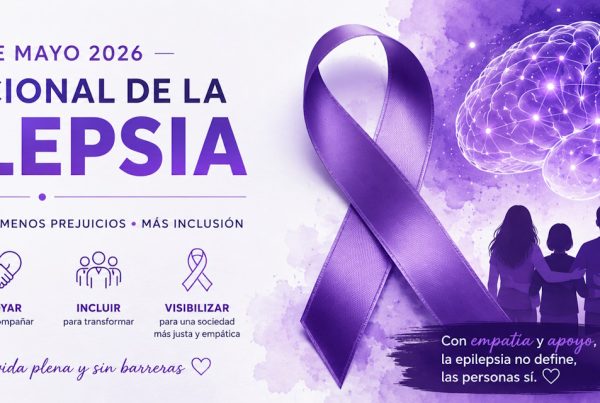


The lack of information and ignorance mean that those affected by epilepsy suffer certain social stigmas that harm them. Sometimes, people with epilepsy claim that social prejudice affects them more than the disease itself. Below we detail false myths about epilepsy. If together we can bring them down, we will improve the quality of life of the 50 million people affected by epilepsy worldwide according to the World Health Organization (WHO).
Touch the items to reveal explanation
FALSE
Epilepsy is a mental illness
It is wrong to assume someone with epilepsy has a psychiatric disorder as epilepsy itself is not a mental illness.
FALSE
Epilepsy is a rare disease
According to the WHO, 50,000,000 people in the world suffer epilepsy. This means that one in 100 is affected.
FALSE
Flashing lights cause epilepsy
Light flashes only affect people suffering photosensitive epilepsy, which usually affects children and young people. Lights alone do not cause epilepsy.
FALSE
An epileptic seizure causes violent convulsions
There are different degrees of seizures. There are, for example, partial ones, which do not cause loss of consciousness and may even go unnoticed.
FALSE
Epilepsy is contagious through physical contact
There are genetic and physical factors, among others, that can lead to epilepsy, but never physical contact with other people.
FALSE
You should put something in a person’s mouth to stop them from swallowing their tongue during a seizure
It is physically impossible to swallow your tongue. You can harm yourself or the person’s teeth, jaw and mouth if you try to force something into their mouth.